
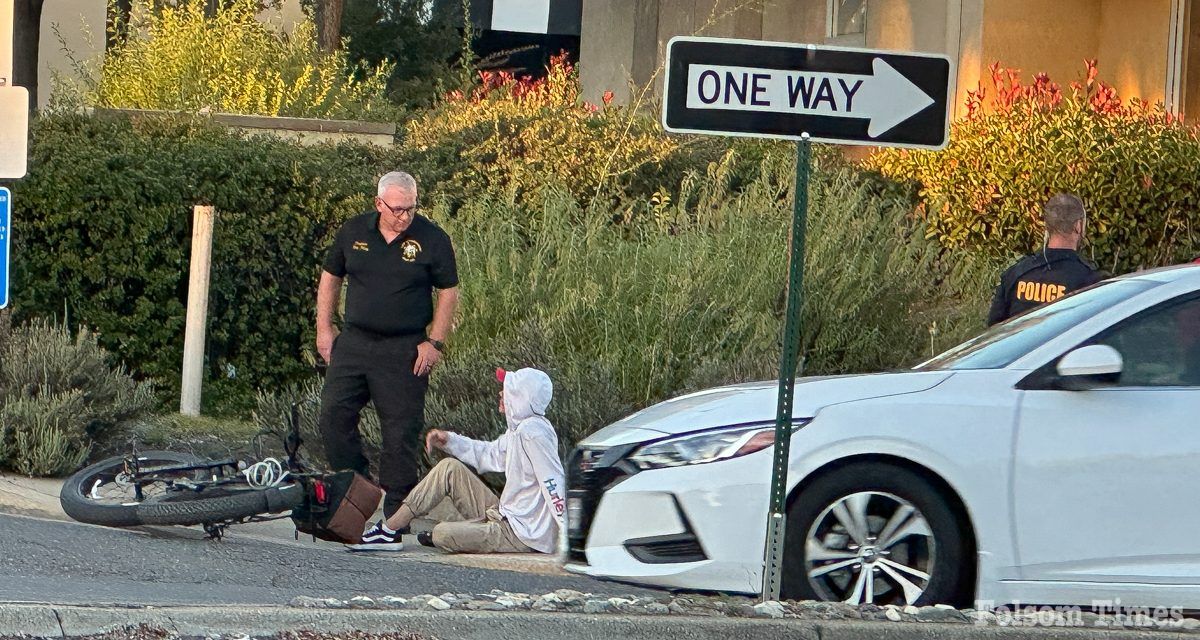
Proposals would restrict riding in parks, target unsafe behavior and reinforce 15-mph limit on city trails
Months after Folsom police presented city leaders with data showing a sharp rise in e-bike complaints, collisions and dangerous encounters involving juvenile riders, a pair of proposed ordinances designed to give the city additional tools to address the problem is headed to the Folsom City Council.
The council will consider Ordinances No. 1376 and 1377 on Tuesday, Sept. 8, establishing new regulations for e-bikes, electric motorcycles, scooters and other electric conveyances in city parks, on public property and throughout Folsom’s Class I trail network.
The proposals follow an issue that has been building for several years and that police brought directly before the City Council in an extensive presentation earlier this year. As previously reported by Folsom Times, police told council members that calls involving e-bikes and similar electric vehicles had risen sharply, with juveniles accounting for the overwhelming majority of incidents.
Now, city staff is asking the council to put some of the regulatory changes discussed during that earlier presentation into the Folsom Municipal Code.
According to the latest staff report, the Police Department continues to experience a significant number of calls involving electric conveyance riders, particularly juveniles, on roadways, in city parks and on bicycle paths. Those incidents have included dangerous riding, threatening behavior, property damage and collisions.
One proposal, Ordinance No. 1376, would add Chapter 10.44 to the Folsom Municipal Code and establish specific regulations governing e-bikes and other electric conveyances.
Under the proposed ordinance, operating those devices generally would be prohibited in city parks, playgrounds and school grounds unless signs specifically authorize their use. The ordinance would allow those responsible for individual properties to designate paths or areas where e-conveyance use is permitted.
The ordinance would also prohibit a range of unsafe riding behaviors, including performing stunts, carrying passengers when a device is not designed for them, failing to yield to pedestrians, using a handheld phone while riding and disregarding posted signs.
City staff describes the proposal as narrowly tailored to address dangerous or improper behavior while continuing to allow safe and appropriate e-conveyance use.
The second measure, Ordinance No. 1377, would amend Section 10.40 of the municipal code to prohibit unsafe riding on Folsom’s Class I bicycle path network and strengthen the city’s ability to enforce the existing 15-mph trail speed limit.
Earlier presentation showed scope of growing problem
The proposed ordinances put into action months of discussion surrounding a problem Folsom police previously described as rapidly growing.
During the earlier City Council presentation covered by Folsom Times, Lt. Jake Verhalen of the Folsom Police Department’s Neighborhood Services Division detailed a dramatic rise in incidents as electric bicycles and higher-powered electric motorcycles became increasingly common around the city.
Police reported that e-bike-related calls for service climbed from 23 in 2023 to 350 in 2025, with more than 90 percent involving juveniles. Police also identified concentrations of complaints around Econome Park, the Palladio and Parkway neighborhoods, while reporting problems in parks, playgrounds, neighborhoods and along the city’s trail system.
Collisions also increased. Police reported four e-bike-related collisions in 2023 compared with 12 in 2025. Nearly two-thirds of the riders involved in the 2025 collisions were juveniles, and police said juvenile riders were determined to be at fault in roughly three-quarters of those cases.
The earlier discussion also highlighted an important distinction between legal electric bicycles and increasingly popular electric motorcycles that can resemble bicycles but are capable of much higher speeds.
Verhalen told the council that some of those vehicles can exceed 60 mph and, depending on their specifications, fall under motor vehicle requirements rather than e-bike regulations. Police said officers routinely encounter juveniles operating those vehicles without the driver’s licenses, motorcycle endorsements, registration or license plates required for legal operation.
The problem has presented enforcement challenges as well.
During the previous presentation, police described incidents in which juvenile riders fled from officers, including one involving a rider suspected of vandalism who traveled at more than 60 mph before officers discontinued their pursuit for safety reasons. A sheriff’s helicopter ultimately helped authorities locate the rider.
In another incident discussed with the council, an officer was dragged approximately 25 feet when a juvenile riding an electric motorcycle fled. Police said the officer suffered injuries that kept him off duty for an extended period.
Those incidents helped frame a broader City Council discussion about how to regulate the vehicles without unnecessarily restricting responsible riders.
Council members raised concerns ranging from speeding and harassment to riders disrupting activities at parks and traveling through environmentally sensitive areas. They also questioned how additional regulations could realistically be enforced when riders can quickly leave an area before officers arrive.
Council Member Barbara Leary described complaints involving riders harassing other young people, following children walking home and riding through playgrounds and soccer games. Council Member Anna Rohrbough raised concerns about activity in Parkway neighborhoods and near the Duck Pond area, including electric motorcycles being ridden through the nature reserve.
Rohrbough also emphasized the effect high-speed electric vehicles can have on pedestrians and other trail users, particularly children, seniors and people walking pets.
Council Member Mike Kozlowski questioned whether registration or permitting could eventually provide officers with another way to identify riders and hold juveniles and their parents accountable. Council members also discussed additional signage, education for parents, potential designated riding areas and technology such as drones that could help police identify riders who flee without requiring officers to engage in potentially dangerous pursuits.
Not all of those ideas are contained in the ordinances coming before the council Tuesday. The measures instead focus on establishing enforceable rules for where electric conveyances may be operated and what constitutes prohibited riding behavior.
Education and enforcement already underway
Folsom police have been working to address the issue before seeking the new regulations.
Traffic and school resource officers began education campaigns in 2023, according to the staff report, and those efforts continue. The department has worked with Folsom Cordova Unified School District to educate students and parents about laws governing electric conveyances and has conducted outreach through social and traditional media.
Officers have also issued warnings and traffic citations. This year, patrol officers have conducted proactive enforcement, including issuing citations, towing electric motorcycles and making arrests for crimes allegedly committed by people operating the vehicles.
Despite those efforts, police say complaints about unsafe riding and reports of damage to city parks have continued.
In preparing Ordinance No. 1376, city staff consulted with Folsom Parks and Recreation, trail planning staff, Folsom Cordova Unified School District, California State Parks, businesses and a local nonprofit cycling organization.
According to the staff report, the intent was to develop regulations that address problem behavior while allowing riders of all ages to continue safely using legal electric conveyances where permitted.
Folsom’s proposed regulations come amid rapid growth in electric transportation nationwide. City staff cited industry figures indicating approximately 2 million electric conveyance units were sold in the United States in 2025, including e-bikes, e-scooters, electric motorcycles and other single-rider devices.
The financial impact to the city is expected to be minimal. Any revenue generated through fees or fines is expected to be limited, while enforcement costs would be covered through existing Police Department personnel and equipment budgets.
Both ordinances are scheduled for introduction and first reading Tuesday. They are not currently in effect, and council consideration Tuesday does not mean the regulations have already become law.
For residents who have watched the issue grow on neighborhood streets, trails and in city parks, however, Tuesday’s meeting represents the next significant step in a discussion that began well before the proposed ordinances reached the council agenda.

Copyright © 2026, Folsom Times, a digital product of All Town Media LLC. All rights reserved. No portion of this publication may be reproduced, distributed, or transmitted in any form or by any means, without the prior written permission of the publisher.


