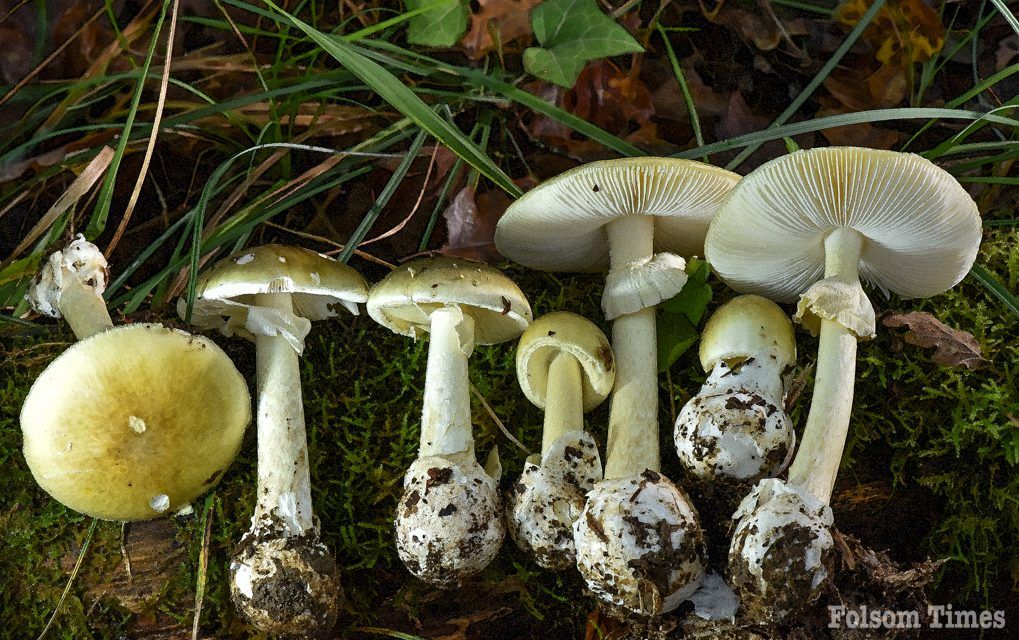
Public health officials warn residents to avoid wild mushroom foraging as Death Cap-related illnesses, hospitalizations and deaths increase across California
Sacramento County Public Health is reporting multiple confirmed cases of dangerous mushroom poisoning locally as California continues to experience what health officials are describing as an unprecedented statewide outbreak linked to the accidental consumption of wild, foraged mushrooms.
According to Sacramento County Public Health, four cases of amatoxin poisoning have been confirmed in Sacramento County after individuals mistakenly picked and consumed highly toxic wild mushrooms. The local cases are part of a larger, ongoing outbreak that has already resulted in severe liver damage, hospitalizations, multiple deaths, and liver transplants statewide.
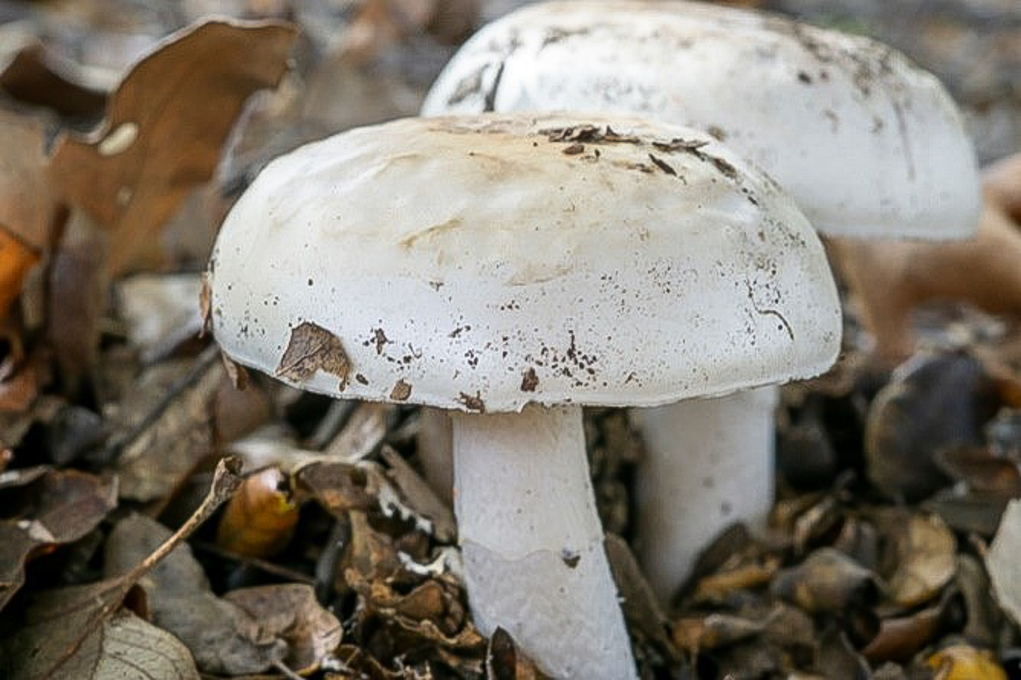
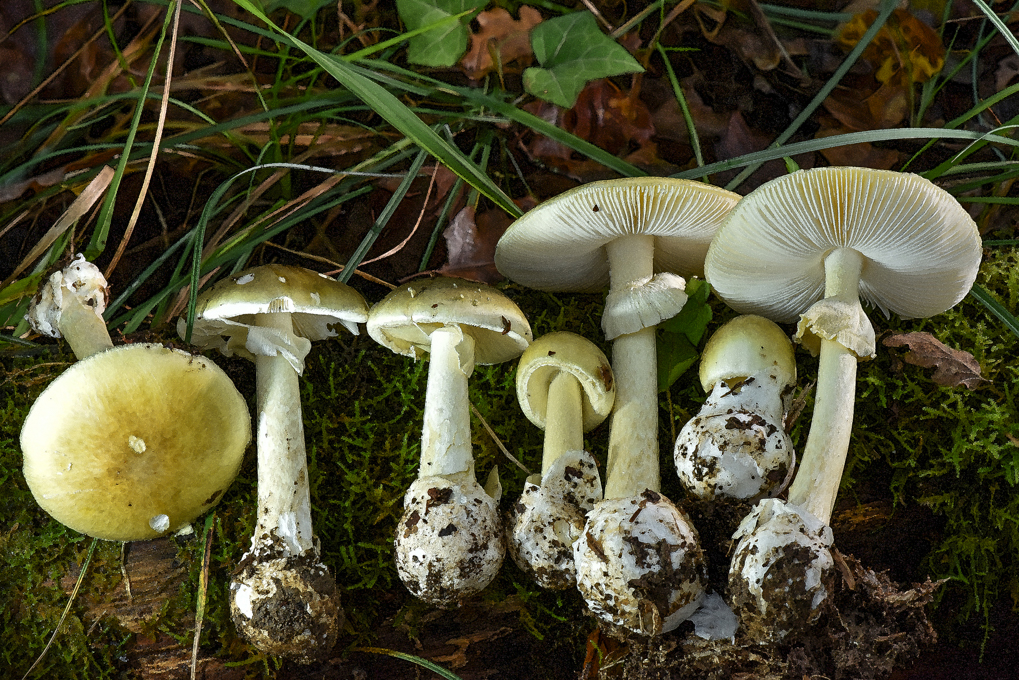
Public health officials say recent and ongoing rainfall across California has created ideal growing conditions for wild mushrooms, including some of the most toxic species found in North America. Of particular concern are the Death Cap mushroom, known scientifically asAmanita phalloides, and the Western Destroying Angel mushroom, orAmanita ocreata. Officials warn that both species are easily confused with edible mushroom varieties and pose a serious risk even to experienced foragers.
Sacramento County Public Health emphasized that all mushroom foraging should be avoided during the current high-risk season. Health officials note that poisonous mushrooms remain toxic even after cooking, boiling, freezing, or drying, and that no home preparation method can make them safe to eat.
The local cases come amid a continuing statewide outbreak that has affected both adults and children. Across California, the outbreak has resulted in at least three adult deaths and three liver transplants to date, according to state health officials. Reports indicate that severe liver damage has occurred in multiple cases, sometimes progressing rapidly despite early medical care.
Between Nov. 18, 2025, and Jan. 6, 2026, the California Poison Control System identified 35 hospitalized cases linked to wild mushroom ingestion across Northern California and the Central Coast. Those cases span a wide geographic area, from Sonoma County in the north to San Luis Obispo County in the south, underscoring the widespread nature of the outbreak.
Patients affected during that period ranged in age from just 19 months old to 67 years old. The cases included both individual exposures and family groups who consumed foraged mushrooms together. Medical treatment for amatoxin poisoning has been provided in Alameda, Contra Costa, Monterey, Sacramento, San Francisco, San Luis Obispo, San Mateo, Santa Clara, Santa Cruz, and Sonoma counties.
While the highest number of cases have been reported in Monterey County and the San Francisco Bay Area, public health officials stress that Death Cap mushrooms grow throughout California. The mushrooms are commonly found near oak trees, other hardwoods, and some pine species and frequently appear following periods of wet weather. Officials say mushrooms linked to this outbreak were collected from a variety of outdoor locations, including county lands, city property, and public park areas.
Sacramento County Public Health officials are coordinating closely with California Department of Public Health and poison control experts to investigate cases, track trends, and expand public education efforts. The department is sharing state-developed educational materials and reinforcing statewide public health messaging aimed at reducing exposure during this dangerous foraging season.
“We understand that people may not realize the risk of mushroom foraging right now, because these mushrooms can closely resemble edible types,” said Dr. Olivia Kasirye, Sacramento County’s public health officer. “That’s why we’re urging residents to avoid wild mushroom foraging altogether and to seek immediate help if exposure is suspected.”
Health officials say one of the greatest dangers associated with toxic mushrooms is the delay in symptom onset. Early symptoms of amatoxin poisoning often appear between six and 24 hours after ingestion and may include watery diarrhea, nausea, vomiting, abdominal pain, dehydration, cramping, fatigue, confusion, and drops in blood pressure. In some cases, those symptoms may temporarily improve within a day, leading individuals to believe they are recovering.
That apparent improvement can be dangerously misleading, officials warn. Even after early symptoms subside, serious to fatal liver damage can develop within 48 to 96 hours after eating toxic mushrooms. In severe cases, patients may require liver transplantation or experience life-threatening complications affecting the kidneys and other organs.
Public health officials emphasize that even mild symptoms can signal the beginning of a much more severe reaction and that prompt medical evaluation is critical. Treatment is significantly more difficult once symptoms progress, making early action essential.
Mushroom poisoning can result in a range of serious complications, including acute liver failure, kidney damage, seizures, hallucinations, euphoria, and death. Young children are particularly vulnerable, with most accidental poisonings occurring in children under the age of six who may encounter mushrooms while playing outdoors. Pets are also at risk if they ingest wild mushrooms.
Officials also caution that individuals who are newly arrived to California may face heightened risk. Some poisonous mushrooms found in California closely resemble edible species foraged or cultivated safely in other countries, increasing the likelihood of accidental ingestion.
Anyone who believes they or someone they know may have eaten a poisonous mushroom is urged to seek medical care immediately or contact the California Poison Control Hotline at 1-800-222-1222. The hotline operates 24 hours a day, seven days a week, is free to use, and provides assistance in more than 200 languages. Poison control specialists can give immediate instructions to the public and guidance to medical providers to help ensure proper care.
When seeking medical treatment, officials advise bringing any uneaten portions of the mushroom, if available, to help experts identify the species involved. Mushrooms should be stored in a paper bag or waxed paper and refrigerated, not placed in plastic. If the mushroom is no longer available, photographs showing the cap, stem, and underside can also assist with identification.
Health officials note that touching poisonous mushrooms generally does not pose a serious risk, but hands should always be washed afterward. Poisonous mushrooms should be disposed of in sealed bags placed in regular garbage or municipal compost bins, and not in home compost systems.
As the outbreak continues into the winter season, Sacramento County Public Health officials stress that the safest and most effective way to prevent mushroom poisoning is to completely avoid eating wild mushrooms.
Copyright © 2026, Folsom Times, a digital product of All Town Media LLC. All rights reserved. No portion of this publication may be reproduced, distributed, or transmitted in any form or by any means, without the prior written permission of the publisher.