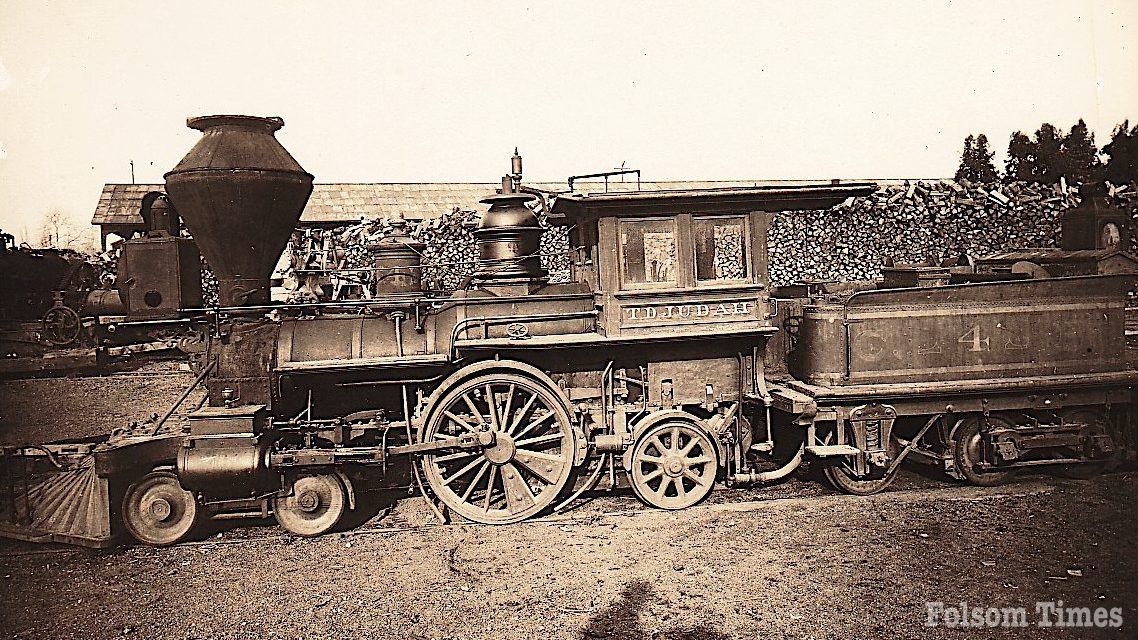
Historic community event will honor the arrival of the Sacramento Valley Railroad and the legacy of Theodore Judah
The iron rails that helped transform a foothill outpost into a lasting city will return to the spotlight next month as Folsom commemorates the railroad that shaped its identity, economy and future.
On Wednesday, March 4, the City of Folsom and its partners will host “Folsom’s Railroad Legacy: Celebrating the Route That Built a Region,” a free public anniversary event recognizing the arrival of the Sacramento Valley Railroad in Folsom in 1856. The community celebration will take place from 10 a.m. to 2 p.m. at the Historic Folsom Station Plaza near the railroad turntable, with public parking available in the Historic District Garage.
The event marks two intertwined historical milestones that continue to define the city. In 1856, completion of the Sacramento Valley Railroad connected Sacramento to Folsom for the first time, transforming commerce, mobility and regional development. The day also honors Theodore Dehone Judah, the railroad’s chief engineer and the planner of Folsom’s original townsite, whose birth 200 years ago is being recognized as part of the anniversary observance.
City officials describe the celebration as both an educational and experiential opportunity for residents and visitors to better understand how rail transportation altered Folsom’s trajectory at a critical moment in California history. What was once a remote Gold Rush-era settlement became a vital transportation terminus almost overnight, setting the stage for long-term growth and permanence.
Throughout the event, attendees will experience railroad turntable demonstrations, educational exhibits, historic artifacts and hands-on activities designed to bring the railroad era to life. Period costumes and themed photo opportunities will further immerse guests in the mid-19th century, while free admission to Folsom History’s outdoor museum known as The Square and the Folsom Railroad Museum will allow visitors to explore the story in greater depth.
The program will include a series of presentations from respected railroad historians, each offering a distinct perspective on the people and infrastructure behind Folsom’s railroad legacy.
Historian Paul Helman will present an in-depth examination of the Sacramento Valley Railroad, focusing on its construction, operation and significance during a time when California was transitioning from Gold Rush territory into a connected and organized state. Helman holds a degree in chemical engineering and spent 32 years working for the Procter & Gamble Company in a range of technical roles. Since 2002, he has volunteered as a docent at the California State Railroad Museum, where he has logged more than 17,500 volunteer hours leading tours and interpreting railroad history for visitors. His work includes participation in popular programs such as “The Polar Express,” and he is also a qualified signal system maintainer for the museum’s excursion railroad.
Chuck Spinks will focus on the life and legacy of Theodore Dehone Judah, whose engineering vision helped shape both Folsom and the future of rail transportation in California. Spinks holds bachelor’s and master’s degrees in civil engineering and spent more than four decades planning and designing hydroelectric projects, water and recycled water systems, pump stations and other major infrastructure. His volunteer service includes work with the American Society of Civil Engineers, Veterans of Foreign Wars and the Placer-Sierra Railroad Heritage Society. In addition to serving as a docent at the California State Railroad Museum, Spinks is also the director of the Auburn Veterans Day Parade.
The program will also feature Christine Pifer-Foote, whose research centers on Anna Pierce Judah, an often-overlooked figure whose artistic and personal contributions remain deeply connected to the railroad story. Pifer-Foote is a retired educator with advanced degrees in education and divinity and has spent the past five years researching Anna Judah, with particular emphasis on her lost artwork. She previously served as the volunteer curator and author of the 12-panel exhibit “Painting a Legacy: The Search for Anna Judah,” currently on display at the California State Railroad Museum, and is in the process of completing a full biography of Anna Judah.
The celebration will conclude with a birthday cake honoring Theodore Judah near the historic railroad turntable, underscoring the personal legacy behind one of the most transformative periods in Folsom history.
Additional event details and updates are available through the City of Folsom’s website. Sacramento Valley Railroad Invi…
Looking back: How the railroad first arrived in Folsom
The arrival of the railroad in Folsom in 1856 stands as one of the most consequential moments in the city’s history, reshaping a young community at a time when California itself was still defining its future.
When the Sacramento Valley Railroad reached Folsom, the town was only a few years old, having emerged from its early identity as Granite City. Captain Joseph Folsom, whose name the town would later carry, was navigating financial and legal struggles in the early 1850s when a group of Californians moved forward with plans to build a railroad connecting Sacramento to the foothills.
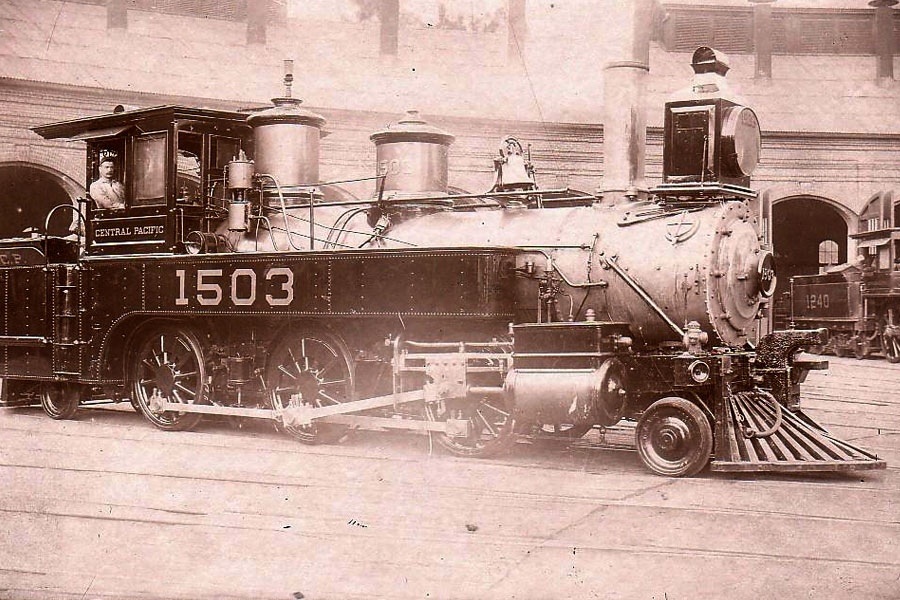
Construction began just down the hill from town, and the line was completed three years later, linking Sacramento to Folsom in the same year the city’s first newspaper began publication. The railroad immediately elevated Folsom’s status as a transportation and commercial center, bringing reliability, speed and connectivity that few interior towns could match.
Central to the project was Theodore Dehone Judah, a young but already respected engineer who had gained national recognition through his work on the Niagara Gorge Railroad, widely regarded at the time as a remarkable engineering feat. In 1854, Col. Charles L. Wilson, president of the Sacramento Valley Railroad, traveled east to purchase equipment and supplies. During that trip, New York Gov. Horatio Seymour introduced Wilson to Judah, who was eager to bring his skills west.
Judah arrived in California with ambitions that extended far beyond a single rail line. The idea of a transcontinental railroad had been discussed since the early 1830s, and by the time Judah accepted his role with the Sacramento Valley Railroad, multiple proposals for a “Pacific Railroad” had already been introduced in Congress. Before leaving the East Coast, Judah publicly declared his confidence in the project, stating that the Pacific Railroad would be built and that he intended to be part of it.
Within 15 days of beginning work in California, Judah issued a detailed report outlining the preliminary survey and future business prospects of the Sacramento Valley Railroad. He remained with the project through completion of the track to Folsom in February 1856 while also surveying additional rail routes, consulting on other projects, lobbying Congress in Washington and laying out the original townsite of Folsom.
Judah’s relentless pursuit of a transcontinental route earned him a reputation as both a visionary and an idealist. His enthusiasm and persistence eventually earned him the nickname “Crazy Judah,” reflecting the skepticism he faced from financiers whose interests were tied to stage lines, steamships and express companies rather than railroads.
Despite repeated rejections, Judah persevered, raising funds from small mountain towns such as Dutch Flat and continuing to explore possible routes through the Sierra Nevada. His greatest disappointment came in the early 1860s, when the Central Pacific Railroad moved forward under the leadership of Leland Stanford, Collis P. Huntington, Mark Hopkins and Charles Crocker. Judah believed the group was more focused on profit than on building the railroad responsibly and ultimately left California to raise capital in an attempt to buy them out.
In 1863, Judah traveled east but contracted yellow fever while passing through Panama. He died shortly after returning to New York City at the age of 37, never living to see the transcontinental railroad completed.
Rail service in Folsom declined in the decades that followed, but the city’s connection to rail never disappeared. In October 2005, Regional Transit reached Folsom, restoring passenger rail service as a central part of the community’s transportation network. Preservation efforts have also ensured that Folsom’s railroad heritage remains visible today, including the historic turntable and a reconstructed roundhouse in the Historic District that echoes the city’s industrial origins.
As Folsom prepares to mark this latest railroad anniversary, city leaders cite that the March 4 celebration is both a tribute to the past and a reminder of the vision, risk and determination that helped transform a foothill settlement into the city Folsom is today.
Copyright © 2026, Folsom Times, a digital product of All Town Media LLC. All rights reserved. No portion of this publication may be reproduced, distributed, or transmitted in any form or by any means, without the prior written permission of the publisher.