RANCHO CORDOVA — Rancho Cordova officials on Monday night moved the city’s long-debated sports and entertainment arena proposal another step closer to reality, approving a $940,000 subsidy to offset development fees tied to the project while emphasizing that the vote does not guarantee the arena will ultimately be built.
The City Council’s action authorizes the use of general fund dollars to cover planning, permitting, and consultant-related fees that would otherwise be paid by the project’s developer as designs and applications move through the city’s approval process. City leaders described the funding as a necessary procedural step for a development of unprecedented scale in the city, one that allows staff and outside experts to conduct required reviews without delay.
“Those fees are for specific city staff as well as consultants to be able to do the work in reviewing the permits and processes as they come in,” said Amanda Norton, Rancho Cordova’s economic development director, during Monday’s meeting.
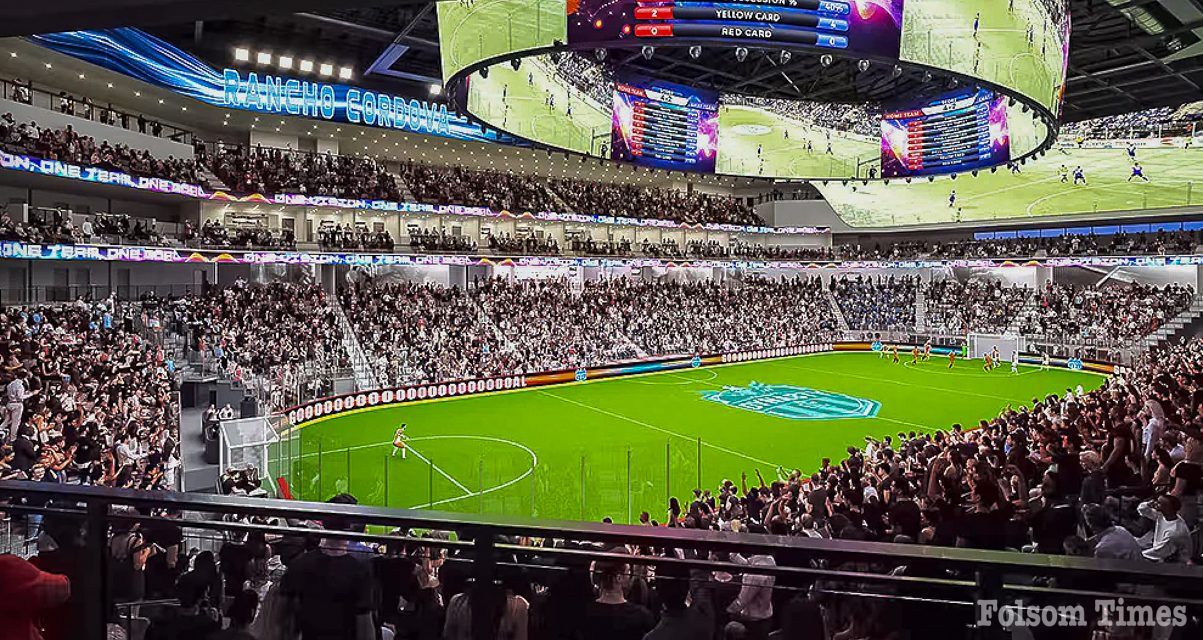
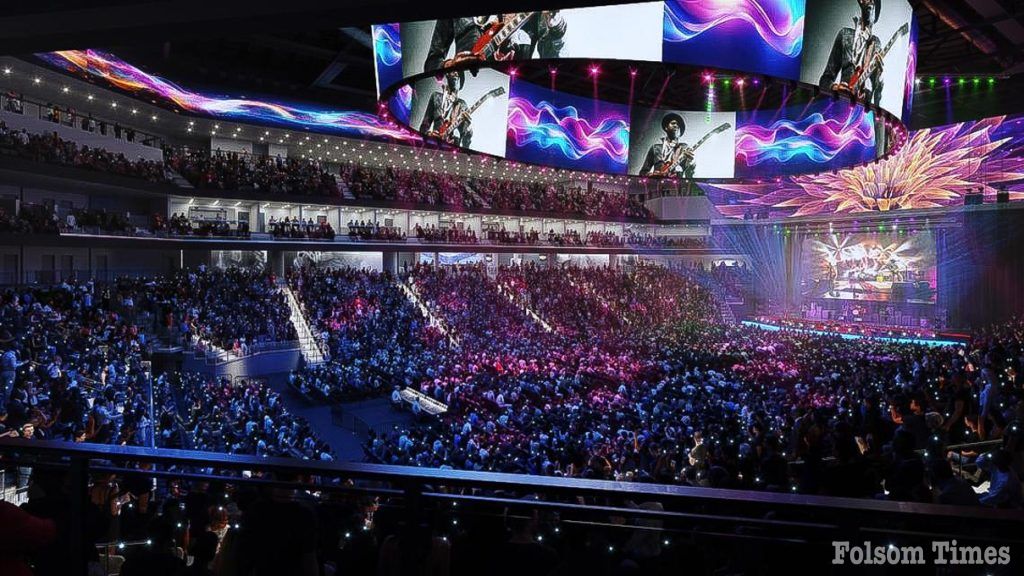
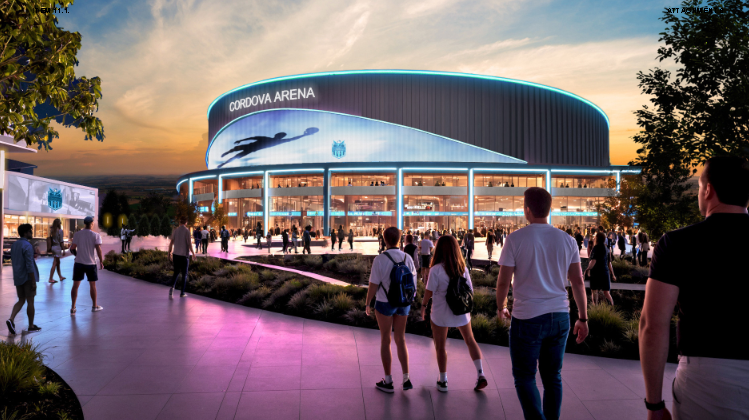
The nearly $1 million subsidy represents the latest milestone in a project first unveiled publicly last September, when developers announced plans to build a new 7,500-seat sports and entertainment arena on vacant land partially owned by the city. The venue, branded as “Dova,” is designed to host a new indoor professional soccer league franchise while also serving as a mid-sized concert and events venue for the Sacramento region.
City officials stressed that Monday’s vote was narrowly focused on fee reimbursement and does not obligate Rancho Cordova to complete the project if future benchmarks are not met.
“With any project, there’s always some risk involved,” Norton said. “However, this is a monumental project for the city. This is something we really believe our community is looking for, and we’re really excited for it.”
Developers have estimated the arena’s construction costs at approximately $175 million and have indicated that private investors are already in place to fund the build. According to city staff, the project remains on track to seek final design approval from the Planning Commission in February or early March, a key step that would clear the way for construction to begin as early as this spring.
Arena at heart of broader city center plan
As previously reported in Folsom Times, the City Council voted unanimously last September to approve an Economic Development and Participation Agreement with KozPure Development, LLC and Alpha One Sports and Entertainment Group, LLC, paving the way for a $4.5 billion sports-anchored city center development planned across 28 acres at 2875 Kilgore Road and adjacent parcels within Rancho Cordova’s Convention Overlay District.
At the center of that agreement is the 7,500-seat arena, which would serve as the home of a men’s team in the Major Arena Soccer League as well as the Sacramento region’s first professional women’s soccer team, both expected to debut in fall 2027. City consultants previously told the council the facility would fill a long-standing gap in the regional entertainment market, positioned between larger venues such as Sacramento’s Golden 1 Center and smaller performance halls that lack the capacity to attract touring acts and professional sports franchises.
Beyond the arena itself, the master-planned district envisions a dense, walkable city center combining sports, hospitality, housing, and retail. Plans call for two or more hotels totaling at least 800 rooms, including at least one four-star or higher property, along with 640 residential units, a movie theater, a public plaza, and structured parking for more than 3,600 vehicles. Retail and dining offerings are expected to blend national brands and local operators, with developers previously confirming that at least one hospitality group has submitted a letter of interest to open a restaurant on site.
Developers have emphasized that the district is intended to function as more than a destination for ticketed events. The outdoor plaza and surrounding venues are planned for year-round activation, hosting concerts, cultural festivals, family-oriented programming, and community gatherings, including what developers have described as Rancho Cordova’s first city-sponsored New Year’s Eve celebration. The space is also intended to be accessible for graduations, milestone celebrations, and other public events.
Josh Wood, CEO of KozPure Development, told councilmembers Monday that the proposal reflects long-standing demand within the community.
“It’s exciting because our community has always needed this,” Wood said. “If it was easy, everyone would do it. We have built what I think is the best team and the best plan in order to make it happen, and we’re really confident that it’s going to move forward great.”
Community access and long-term benefits were central to earlier council approvals. The development agreement includes commitments for free annual youth soccer camps for Rancho Cordova children, mentorship opportunities for at-risk youth led by professional athletes, and the ability to host CIF, NCAA, and CASL tournaments, bringing high school, collegiate, and youth sports competitions directly into the city.
Housing within the district is structured to include affordability measures, with at least 15 percent of residential units built on city-owned land dedicated to affordable or student housing. Developers have also discussed potential partnerships with universities as part of a longer-term vision to expand Rancho Cordova’s academic and workforce development footprint, particularly in healthcare, technology, business, and sports management fields.
Economic impact studies previously presented to the City Council projected extensive regional benefits tied to the city center project. Over a 12-year period, analysts estimated $2.1 billion in direct spending and more than 22,000 jobs supported, with indirect and induced economic activity adding billions more in output and tens of thousands of additional jobs. Combined, the project was forecast to generate $4.5 billion in total economic output and approximately $660 million in new federal, state, and local tax revenues.
City leaders have consistently emphasized that the long-term agreement is structured to minimize taxpayer risk. The 35-year development agreement does not require Rancho Cordova to advance construction funds, pledge its general fund, or guarantee payments. Instead, the city’s role includes dedicating portions of city-owned land, potential fee offsets such as the subsidy approved Monday, and participation in future revenue streams generated within the district. Under the agreement, 100 percent of sales tax generated on site would flow to the city, while transient occupancy tax revenue generated by on-site hotels would be directed to the developer.
With Monday’s vote, the proposal now advances to its next phase of public review as detailed arena designs head to the Planning Commission. While final approvals remain ahead, city officials framed the decision as another concrete step toward reshaping Rancho Cordova’s economic and cultural landscape.
As outlined in earlier Folsom Times reports, the project is envisioned as a catalyst to transform Rancho Cordova from a commuter-oriented suburb into a regional destination for sports, entertainment, and community gathering — a shift that, if realized, would mark one of the most significant developments in the city’s history.
Copyright © 2026, Folsom Times, a digital product of All Town Media LLC. All rights reserved. No portion of this publication may be reproduced, distributed, or transmitted in any form or by any means, without the prior written permission of the publisher.