Expanded Sacramento County ordinance extends enforcement to private property
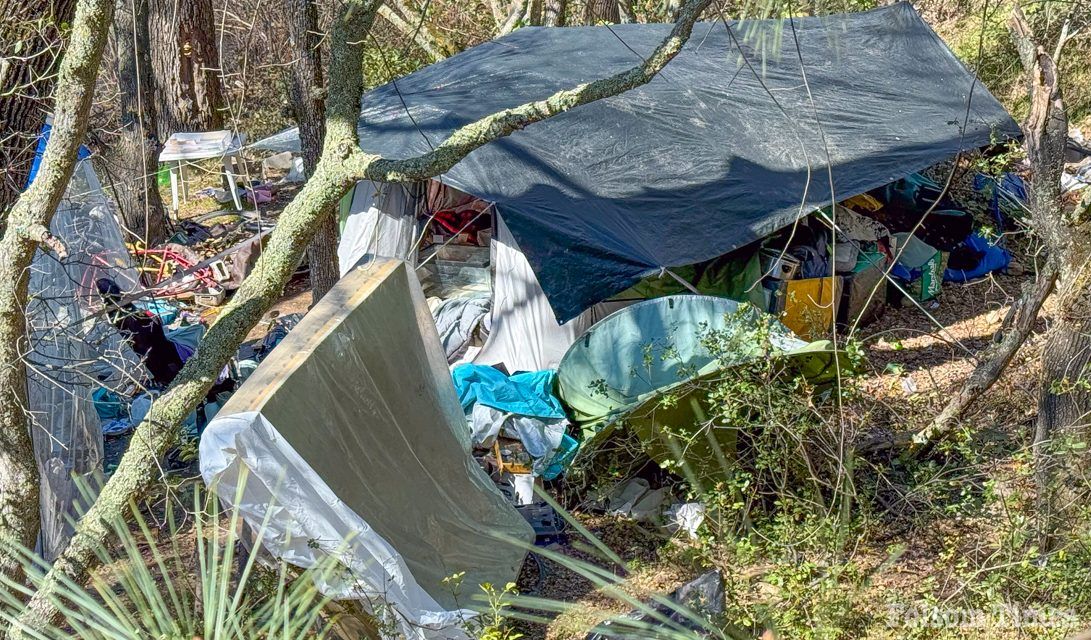
The Sacramento County Board of Supervisors has approved a significant expansion of its unlawful camping ordinance, extending enforcement authority to most private property in unincorporated areas as part of an effort to address unmanaged encampments that have increasingly shifted beyond public land.
The revised ordinance, expected to take effect in approximately 30 days, authorizes deputies with the Sacramento County Sheriff’s Office to intervene when camps are established on private parcels where property owners cannot be reached. County officials have said earlier regulations limited enforcement largely to public property, creating gaps that allowed encampments to relocate onto private land, including commercial sites, creek corridors and undeveloped parcels.
Under the updated framework, deputies may issue warnings, require individuals to vacate and remove tents and other camping structures from private property that does not meet county standards. Enforcement is intended to follow a graduated process that includes notice and opportunities for compliance when feasible. Any personal property removed during enforcement must be inventoried and stored for up to 90 days rather than immediately discarded, allowing individuals time to recover belongings. County enforcement policies allow for misdemeanor citations or arrest when individuals refuse lawful orders to vacate or interfere with cleanup operations.
The ordinance retains exemptions for individuals camping on property they own or on private property with documented permission from the owner. Lawful camping remains subject to strict conditions, including access to sanitation services such as toilets and trash disposal, fire safety limitations and restrictions on duration. Individuals may remain at one location for no more than three consecutive days and may not camp more than three times in a calendar year.
Beyond enforcement authority, the ordinance includes detailed definitions clarifying what constitutes camping under county law. Camping is defined as the placement or use of camp facilities or paraphernalia for living purposes outdoors. Camp facilities are broadly defined to include tents, temporary structures, vehicles, trailers and recreational vehicles. Camp paraphernalia includes items such as sleeping bags, bedrolls, tarps, hammocks and similar equipment commonly associated with outdoor living.
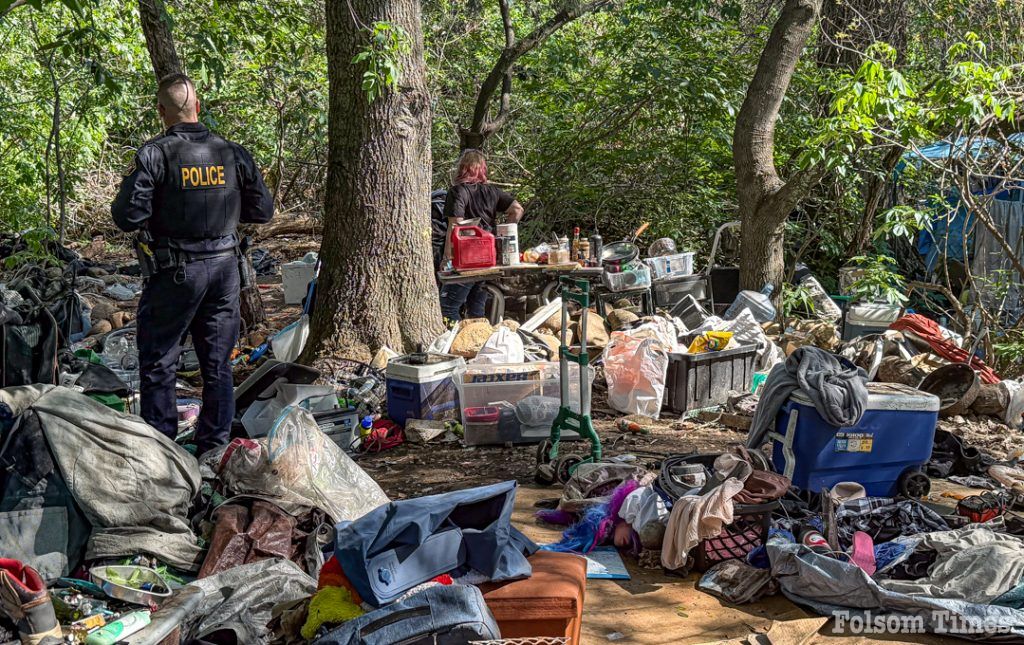
The ordinance also distinguishes between personal property and debris, a distinction that governs how items are handled during enforcement. Personal property such as identification, medications and other usable belongings must be safeguarded, cataloged and stored following removal. In contrast, hazardous materials, garbage and unsafe debris may be removed and disposed of in accordance with public health and safety standards.
In most cases, the ordinance requires the county to provide written notice and a minimum 48-hour cure period before removing unlawful camping structures or materials. Immediate enforcement is permitted only when conditions present an imminent threat, including fire risk, flooding danger, obstruction of emergency access or other hazards to public health or safety.
The updated code also grants the county authority to address conditions associated with unlawful camps beyond tents and structures, including the removal of hazardous waste, infectious materials and debris. Following cleanup, the county may secure properties using fencing or barriers to prevent re-establishment of encampments when warranted.
Interfering with lawful abatement actions is identified in the ordinance as a separate misdemeanor offense. County code specifies that obstructing or resisting county employees or contractors during enforcement or cleanup operations may result in criminal penalties independent of any camping violation.
The ordinance includes formal legislative findings outlining the county’s rationale for updating the law. Those findings cite increases in unmanaged encampments driven in part by housing shortages and note associated risks to public health, environmental quality, water resources, public infrastructure and emergency access. The findings also reference the county’s continued investments in shelter capacity, outreach and supportive services, framing the ordinance as part of a broader homelessness response strategy rather than a standalone enforcement measure.
Local camping regulations across California have been shaped by evolving court rulings over the past decade. In 2018, the U.S. Court of Appeals for the Ninth Circuit ruled inMartin v. Boisethat governments could not criminally penalize individuals for sleeping outdoors on public property when no alternative shelter was reasonably available, a decision that constrained enforcement in many jurisdictions. In 2024, the U.S. Supreme Court narrowed that interpretation, ruling that local governments may impose reasonable restrictions on public camping provided enforcement targets conduct rather than a person’s status as unhoused. Sacramento County officials have said the expanded ordinance was drafted to align with current constitutional standards while preserving due process and property protections.
Although the ordinance applies to unincorporated county areas, city leaders across the region submitted comments ahead of the vote, including strong support from Folsom. In a letter to the Board of Supervisors, Justin Raithel expressed the City of Folsom’s endorsement of the expanded ordinance and emphasized the regional impacts of unmanaged encampments.
In the letter, Raithel wrote that unmanaged encampments “pose serious and well-documented risks to public health and safety, environmental quality, critical infrastructure, and the well-being of both unsheltered individuals and the broader community.” He noted that cities such as Folsom frequently experience downstream impacts from encampments located just outside municipal boundaries, including effects on waterways, trails, transportation corridors and emergency access routes.
Raithel also stressed that enforcement must operate alongside services, writing that Folsom supports “a balanced and compassionate approach that pairs clear enforcement authority with continued investments in shelter capacity, outreach services, and long-term housing solutions.” He described the ordinance as a necessary step to close regulatory gaps that have “limited the ability of law enforcement and service providers to respond effectively.”
The mayor further emphasized the responsibility of local governments to protect shared infrastructure and public spaces while continuing to prioritize paths to stability. In his letter, Raithel wrote that jurisdictions must ensure “safe and accessible public spaces while continuing to connect individuals experiencing homelessness with appropriate services and pathways to stability.”
While the City of Folsom enforces its own municipal codes, city officials have said conditions in nearby unincorporated county areas directly affect residents, businesses and public resources. Encampments located outside city limits can contribute to environmental concerns, increased demands on emergency services and displacement pressures along transportation and open space corridors. City leaders view the county’s expanded ordinance as an important step toward regional consistency and coordinated enforcement rather than encampment displacement across jurisdictional lines.
County staff are expected to finalize implementation procedures ahead of the ordinance’s effective date, with continued coordination among law enforcement, outreach teams and regional partners, including neighboring cities such as Folsom.
Copyright © 2026, Folsom Times, a digital product of All Town Media LLC. All rights reserved. No portion of this publication may be reproduced, distributed, or transmitted in any form or by any means, without the prior written permission of the publisher.