State officials say dry conditions have cut into early winter snowpack after a promising start
A dry January has significantly eroded early-season snowpack gains across California, raising questions about the seasonal water outlook as winter moves into its peak snow months.
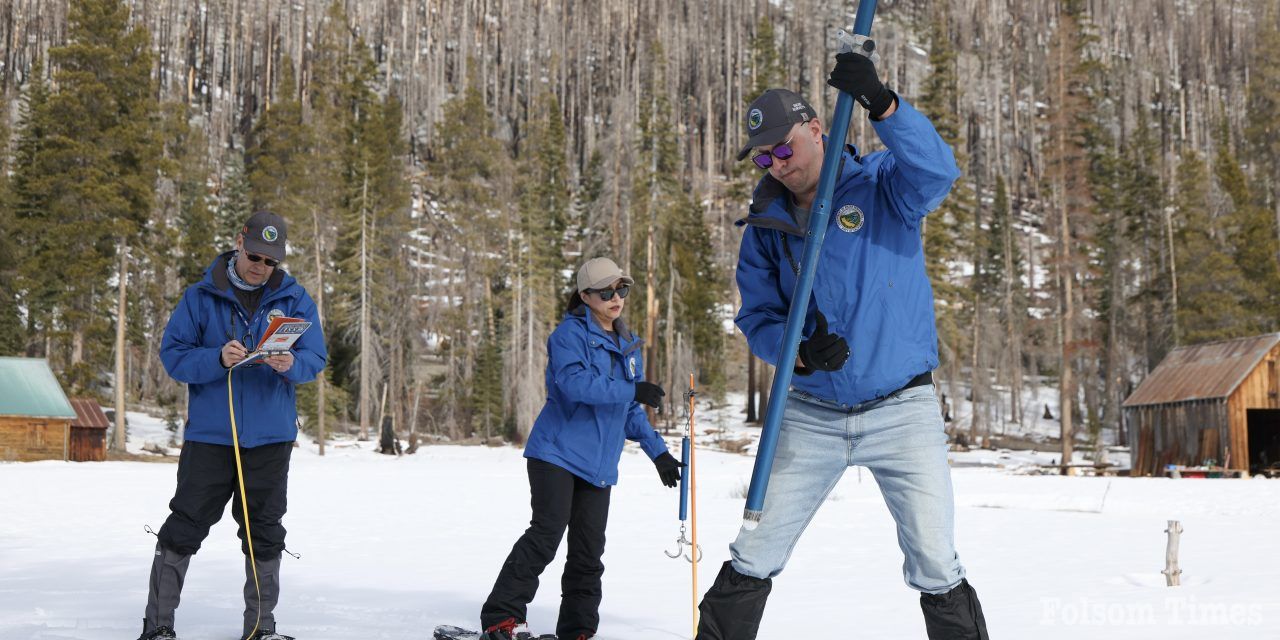
The California Department of Water Resources on Friday conducted the second snow survey of the season at Phillips Station in the Sierra Nevada. Surveyors recorded 23 inches of snow depth and a snow water equivalent of 8 inches — just 46 percent of average for this location. Statewide, the snowpack now measures 59 percent of average for this date.
The snow water equivalent — a measurement of how much water is contained within the snowpack — is a critical factor in calculating California’s water supply outlook. Three weeks ago, after a series of late-season storms bolstered the snowpack, conditions were closer to 89 percent of average. But dry weather in January — historically one of the state’s wettest months — has effectively erased much of that progress. Forecasts currently show little chance of significant precipitation in the coming two weeks.
“After the storms at the start of the year gave way to warm, dry conditions, those early gains we saw have flatlined or slightly eroded,” said Andy Reising, manager of DWR’s Snow Surveys and Water Supply Forecasting Unit. “Recent California winters have seen this pattern of long, dry and warm stretches interrupted by intense storms. We are now two-thirds through what should be the best snow-producing months of the year. While there is still time for February and March to deliver additional snow, the farther into the season we get with below-average conditions, the harder it will be to catch up.”
Electronic data from more than 130 monitoring stations across the Sierra Nevada show the statewide snowpack’s snow water equivalent at 9.7 inches, or 59 percent of average for this date, compared with 67 percent at the same point last year. Historically, January, February and March are the most productive months for Sierra snow accumulation.
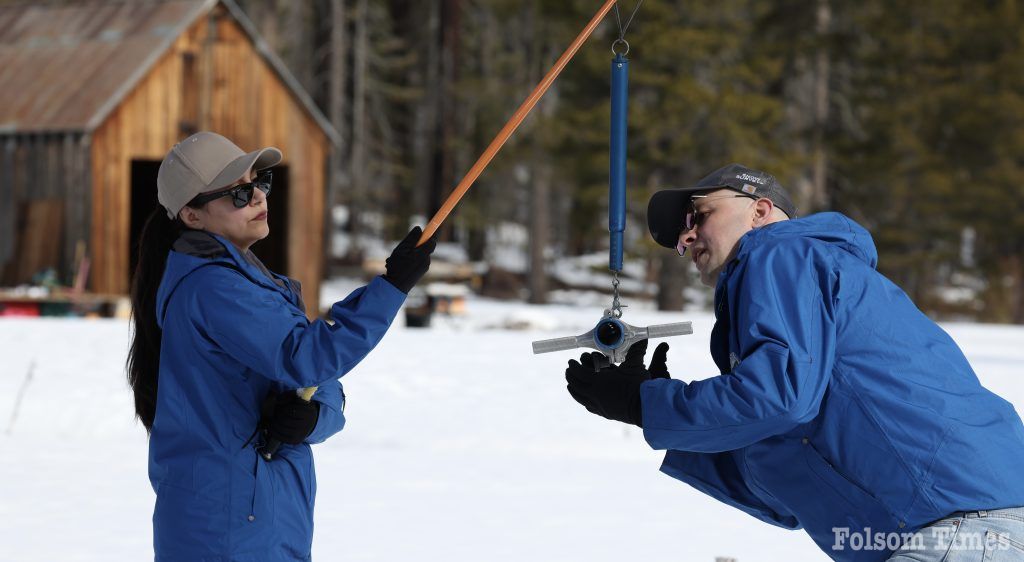
Andrew Nixon / California Department of Water Resources
Despite the recent dry spell, major reservoirs across the state are currently at 126 percent of average, buoyed by recent precipitation and three consecutive years of above-average snowpack, along with continued efforts to capture and store runoff.
The Sierra Nevada snowpack typically supplies about 30 percent of California’s water needs during the spring and summer melt season. Its ability to store water naturally has earned it the nickname the state’s “frozen reservoir.” Data from ongoing snow surveys and forecasts produced by DWR’s Snow Surveys and Water Supply Forecasting Unit serve as key inputs into water management decisions, including allocations through the State Water Project.
DWR conducts four media-oriented snow surveys each winter near the first of the month from January through April, and as needed in May. The next survey is tentatively scheduled for March 2.
For current statewide hydrological conditions, visit the California Water Watch site.
Copyright © 2026, Folsom Times, a digital product of All Town Media LLC. All rights reserved.