Earlier this month, I attended Governor Gavin Newsom’s first State of the State address to a joint legislative session since 2020. While I appreciated his recognition of my work on the Phone-Free Schools Act, much of his speech showcased a reality distortion field, ignoring California’s pressing challenges.
Newsom hailed California as “a roadmap for others to follow,” echoing his prior claim of it being “America’s coming attraction.” Yet, we continue to top national rankings in poverty, unemployment, low literacy, homelessness, gas prices, and outbound migration. These aren’t abstract figures—they reflect real struggles for families amid soaring costs of living. Instead of confronting them, his address highlighted selective wins while glossing over systemic failures.
This gap widened with his budget proposal the next day. Despite a multi-billion-dollar deficit, he ramps up spending to $348.9 billion—$28 billion more than last year. Even his most optimistic forecasts predict a $2.9 billion shortfall this year and double-digit deficits ahead. This isn’t fiscal prudence; it’s a path to deeper cuts and higher taxes burdening residents.
The true deficit is likely steeper. The non-partisan Legislative Analyst’s Office (LAO) forecasted $18 billion in November, and their most recent report calls Newsom’s plan “alarming,” citing “serious concerns about the state’s fiscal sustainability.” Ignoring this advice, the proposal relies on shaky premises.
Newsom’s rosy outlook hinges on $42.3 billion in new revenues, mostly from AI-fueled capital gains. Betting on endless tech booms is risky—markets fluctuate, as seen in past crashes. This gamble exposes California to volatility, with structural deficits of $20–35 billion per year looming in the future. In his final year in office, Newsom defers these problems to his successor rather than solving the problem now.
This echoes past errors. In 2022, he grossly overstated projected revenue gains and declared California had the highest surplus in the history of the United States at $97.5 billion. This was followed by a state spending spree on new programs and priorities. The only problem? That surplus never materialized and Californians were left holding the bag. That, combined with a lack of accountability over homelessness and unemployment insurance funds, led to the deficit we face today.
Increasing spending today ensures larger cuts to vital programs like education and healthcare in the future. The administration admits these risks but offers no solutions. Newsom’s proposal even suspends the constitutionally required $2.8 billion Rainy-Day Fund deposit, one of the state’s few tools to help weather the next economic downturn.
As families battle inflation, this budget favors irresponsible spending hikes over long-term planning. California needs leaders grounded in reality. We also need to stay focused on bold policy changes like streamlining regulations to promote economic growth, boosting workforce skills, and targeting homelessness effectively. Instead, we have an administration that continues to mismanage revenues and deny reality. The Golden State deserves better.
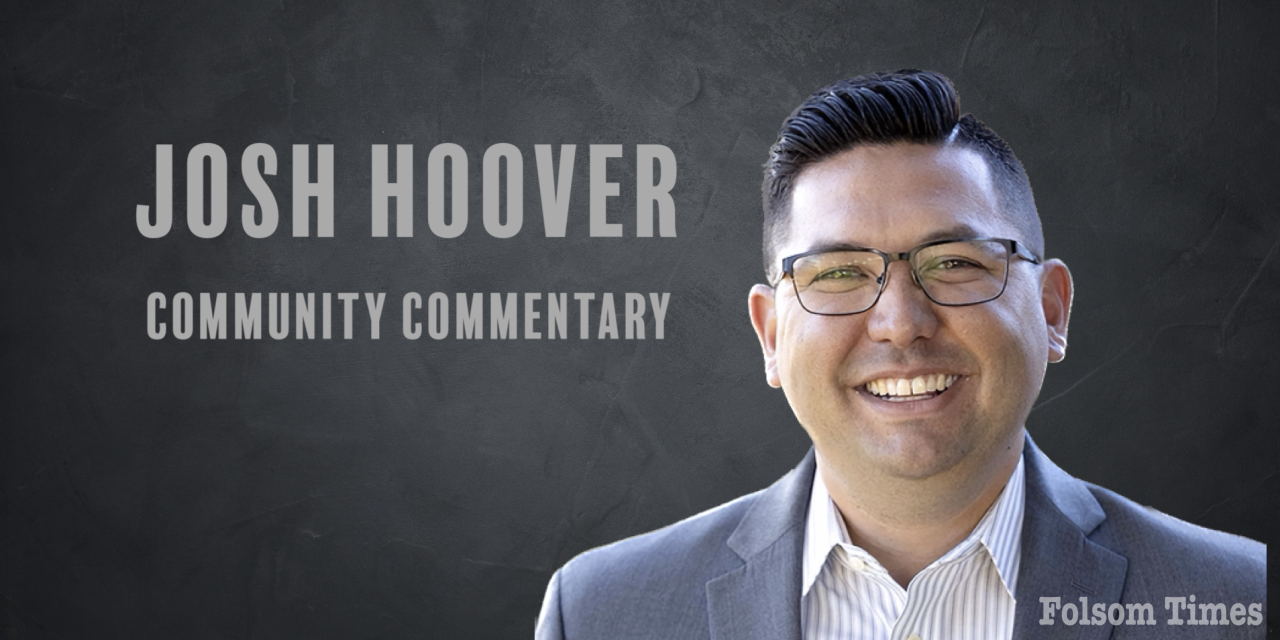
Assemblyman Josh Hoover represents the 7th Assembly District in Sacramento County, which includes the cities of Citrus Heights, Folsom, and Rancho Cordova and the unincorporated communities of Carmichael, Fair Oaks, Foothill Farms, Gold River, Mather, McClellan Park, North Highlands, Orangevale, and Rosemont. You can follow him on X @joshua_hoover or contact his office atAssemblymember.Hoover@assembly.ca.gov.
Copyright © 2026, Folsom Times, a digital product of All Town Media LLC. All rights reserved. No portion of this publication may be reproduced, distributed, or transmitted in any form or by any means, without the prior written permission of the publisher.